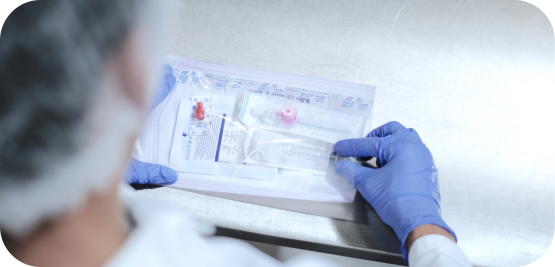
Healthcare products are rarely delivered to hospitals as isolated components. Instead, they are increasingly provided as pre-configured procedural kits containing multiple sterile or non-sterile components required for a specific clinical intervention. These kits may include implants, single-use devices, pharmaceuticals, accessories, and protective materials assembled into a single validated packaging system.
As medical device and pharmaceutical companies transition products from development into industrial-scale manufacturing and distribution, the complexity of kit assembly increases significantly. Ensuring that each kit is assembled correctly, maintains sterility where required, and remains fully traceable requires controlled processes aligned with regulatory expectations.
Surgical kit packing and manufacturing services therefore represent a specialized operational discipline combining logistics, quality management, sterile processing, and validated packaging systems. When performed within a regulated environment, these services enable manufacturers to industrialize product assembly while maintaining compliance with international regulatory frameworks.
The Role of Surgical Kit Manufacturing in Healthcare Supply Chains
Procedural kits have become a key component of modern healthcare supply chains because they simplify hospital logistics and reduce preparation time in clinical environments.
Typical kits may contain:
- Implantable devices
- Disposable surgical instruments
- Sterile consumables
- Pharmaceuticals or injectables
- Packaging accessories and documentation
Instead of hospitals sourcing each item individually, kits allow all required components to arrive assembled, documented, and ready for use. However, assembling these kits introduces significant operational challenges:
- Multi-component traceability requirements
- Lot and serial number management
- Sterility maintenance across multiple materials
- Packaging validation and sterile barrier integrity
- Quality inspection and release procedures
For this reason, many manufacturers rely on specialized contract partners capable of performing kit assembly under ISO 13485-compliant quality systems and controlled manufacturing environments.
Regulatory Framework Governing Kit Assembly
Surgical kit manufacturing must operate within the broader regulatory frameworks governing medical devices and pharmaceutical products. Key regulatory standards typically include:
- ISO 13485 — Quality management systems for medical devices
- ISO 11607 — Packaging for terminally sterilized medical devices
- ISO 11135 / ISO 17665 — Sterilization process standards (EO and steam)
- EU MDR (Regulation (EU) 2017/745)
- FDA Quality System Regulation (21 CFR Part 820)
These frameworks require that manufacturers demonstrate:
- Controlled assembly processes
- Traceability of all components
- Validation of packaging systems
- Documented inspection and release procedures
In addition, kit assembly operations must ensure that sterile components remain protected throughout the manufacturing process and that sterile barrier systems are maintained until point of use.
Process Architecture of Surgical Kit Packing
Industrial surgical kit manufacturing follows a structured process architecture designed to ensure repeatability, traceability, and compliance.
1. Component Reception and Incoming Control
Kit manufacturing begins with the controlled reception of components supplied by the manufacturer or multiple suppliers. Incoming processes typically include:
- Verification of delivery documentation
- Lot and serial number registration
- Visual inspection for transport damage
- Environmental control verification (when applicable)
All materials are entered into a controlled inventory system where full traceability is established before assembly begins.
2. Controlled Storage and Inventory Management
Following reception, components are stored under defined conditions depending on their characteristics. Storage may involve:
- Ambient warehouse environments
- Temperature-controlled storage
- Segregated areas for sterile and non-sterile components
Inventory systems maintain detailed records of:
- Lot numbers
- Storage duration
- Supplier information
- expiration dates
These controls ensure that only approved components are released to the kit assembly process.
3. Pick and Pack Operations
Once a kit order is released for production, components are retrieved from storage through controlled pick and pack procedures. This stage typically includes:
- Digital work instructions defining kit composition
- Barcode-based component verification
- Sequential assembly steps
- Operator verification checkpoints
Each kit configuration is assembled according to a predefined Bill of Materials (BOM) and controlled assembly protocol.
Modern systems increasingly integrate digital manufacturing tools to minimize assembly errors and ensure that the correct components are included in each kit.
4. Kit Assembly and Packaging
During assembly, components are placed into the designated packaging system according to validated instructions. Packaging configurations may include:
- Thermoformed trays
- Pouches
- Multi-layer sterile barrier systems
- Protective packaging for fragile components
Packaging systems must comply with ISO 11607 requirements, ensuring that they can maintain sterility throughout the product lifecycle.
Assembly processes are typically performed in controlled environments designed to protect sterile components and maintain product integrity.
5. Integration of Sterilization Processes
For kits that require terminal sterilization, assembly is followed by sterilization processing. Common sterilization modalities include:
- EO sterilization for temperature-sensitive products
- Steam sterilization for heat-resistant materials
Facilities capable of performing both assembly and sterilization within an integrated operational environment can reduce transport risks and improve efficientcy & process control.
Medistri, for example, operates integrated sterilization services within its infrastructure in Switzerland and Hungary, allowing kit assembly to be combined with validated sterilization workflows.
Traceability and Documentation
One of the most critical aspects of surgical kit manufacturing is the ability to maintain full traceability across all components and manufacturing steps. Traceability systems typically record:
- Component supplier and batch numbers
- Assembly operators and timestamps
- Packaging configuration data
- Sterilization batch information
- Final release documentation
These records ensure that manufacturers can demonstrate compliance during regulatory audits.
Distribution and Logistics Integration
After final inspection and release, surgical kits must be prepared for distribution. Distribution processes may include:
- Final packaging verification
- Labeling and regulatory marking
- Export documentation preparation
- palletization and shipping coordination
Integrated pick, packing, and shipping solutions allow manufacturers to streamline the transition from manufacturing to distribution.
For global healthcare supply chains, this integration helps reduce lead times and ensures that kits arrive at hospitals or distributors in a ready-to-use configuration.
Industrialization and Scalability
As healthcare products transition from clinical development to commercial production, kit manufacturing processes must scale while maintaining quality control. Industrialization typically involves:
- Process validation
- Assembly line standardization
- Digital manufacturing instructions
- inventory planning and logistics integration
Contract manufacturing partners capable of supporting both early-stage assembly and high-volume production can provide continuity throughout the product lifecycle.
With dual operational infrastructure in Switzerland and Hungary, Medistri supports manufacturers across multiple development stages, from small pre-clinical kit preparation to large-scale industrial assembly combined with sterilization and laboratory validation services.
To learn more about Medistri’s Manufacturing services, visit our website here or contact our team at contact@medistri.com.
– The Medistri Team
#Medistri
Medistri is Europe's leading independent contract sterilization company, founded in 2006 and headquartered in the heart of Switzerland. We are a global player providing essential infrastructure that powers healthcare innovation worldwide.
We serve customers of all sizes, from startups, university projects, and research institutes to Fortune 500 corporations, across Medical Devices, Pharmaceutical Packaging, and Biotech.
Medistri supports products at every stage of the lifecycle: pre-clinical development, go-to-market, and full industrialization.
Our fully integrated, end-to-end in-house solution allows our customers to focus on what matters most: engineering, innovation, and development, while we manage the critical back-end processes.
Our synchronized departments work together to provide a complete stack of services:
- Contract Sterilization & Validation Services
- Contract Laboratory Services
- Contract Manufacturing Services
- Logistics Services
- Consulting Services
We help you accelerate time-to-market, reduce barriers to scale, and deliver safer, more sustainable healthcare solutions to patients around the world.
Medistri Solutions for Product in Industrialization Phase
In the industrialisation phase, reliability, scalability, and operational excellence become paramount to sustain high-volume production, maintain consistent quality, and ensure uninterrupted supply to the market.
Medistri serves as your long-term, fully integrated infrastructure partner, delivering a robust portfolio of in-house services optimised for routine commercial manufacturing and ongoing compliance.
Our solutions include routine sterilization services, validation review and maintenance, issuance of sterilization CO₂ certificates, routine laboratory services, environmental monitoring, kit packing services, post-sterilization storage, picking, packing, and shipping, as well as dedicated audit support services.
By controlling the entire production and quality assurance chain within our facilities, Medistri eliminates external dependencies, guarantees process consistency and full traceability, minimises downtime risks, and supports seamless scaling.
allowing your team to focus on optimising product performance, expanding market reach, and driving long-term commercial success with confidence.
FAQ – Surgical Kit Packing and Manufacturing
1. What is surgical kit packing or surgical kit manufacturing?
Surgical kit packing is the controlled process of assembling multiple medical components into a single procedural kit used during a specific medical intervention. These kits may include devices, sterile consumables, implants, pharmaceuticals, and accessories packaged together under regulated manufacturing conditions to ensure traceability, sterility protection, and regulatory compliance.
At Medistri, surgical kit assembly is performed within an ISO 13485–aligned quality environment, integrating controlled pick-and-pack operations, validated packaging systems, and traceability procedures designed to support medical device and pharmaceutical manufacturers operating in EU and US regulatory markets.
2. What regulations apply to surgical kit assembly for medical devices?
Surgical kit manufacturing must comply with several international regulatory frameworks governing medical device production and packaging. Key standards typically include:
- ISO 13485 — Quality management systems for medical devices
- ISO 11607 — Packaging for terminally sterilized medical devices
- EU Medical Device Regulation (EU MDR 2017/745)
- FDA Quality System Regulation (21 CFR Part 820)
- ISO 11135 / ISO 17665 — Sterilization process standards
Medistri’s operations in Switzerland and Hungary are designed to support manufacturers navigating these regulatory environments, combining controlled kit assembly with sterilization services and laboratory verification under a documented quality system.
3. How are surgical kits assembled in a regulated manufacturing environment?
In regulated healthcare manufacturing, surgical kits are assembled through a structured process designed to ensure repeatability and full traceability. The process typically includes:
- Incoming inspection of components
- Controlled storage and inventory management
- Pick-and-pack operations based on a validated Bill of Materials (BOM)
- Assembly into validated packaging systems
- Sterilization when required
- Final inspection and release for distribution
At Medistri, these operations are supported by digital traceability systems, controlled logistics infrastructure, and integrated sterilization processes, helping manufacturers maintain consistent documentation throughout the production lifecycle.
4. Why do medical device companies outsource surgical kit assembly?
Many healthcare manufacturers outsource surgical kit manufacturing because it requires a combination of regulated manufacturing infrastructure, logistics capabilities, and quality system management.
Outsourcing allows companies to access:
- Controlled assembly environments
- Packaging validation expertise
- Integrated sterilization capabilities
- Laboratory testing services
- Scalable logistics and distribution infrastructure
Medistri supports manufacturers by combining kit assembly, sterilization, laboratory services, and pick-pack-ship logistics within a single operational framework, reducing supply chain complexity for healthcare companies operating globally.
5. Can surgical kit packing be combined with sterilization and laboratory testing?
Yes. Many healthcare manufacturers prefer to integrate kit assembly, sterilization, and laboratory verification within the same operational environment. This approach simplifies validation activities and reduces supply chain risks by keeping critical processes within a controlled infrastructure. At Medistri, surgical kit manufacturing can be combined with:
- Ethylene oxide (EO) or steam sterilization
- Microbiological laboratory testing (bioburden, sterility testing, endotoxin analysis)
- Packaging validation testing in accordance with ISO 11607
- Material analysis and compatibility testing
By integrating these services across its dual-site infrastructure in Switzerland and Hungary, Medistri helps manufacturers move from development and validation phases toward industrial-scale production while maintaining regulatory compliance.